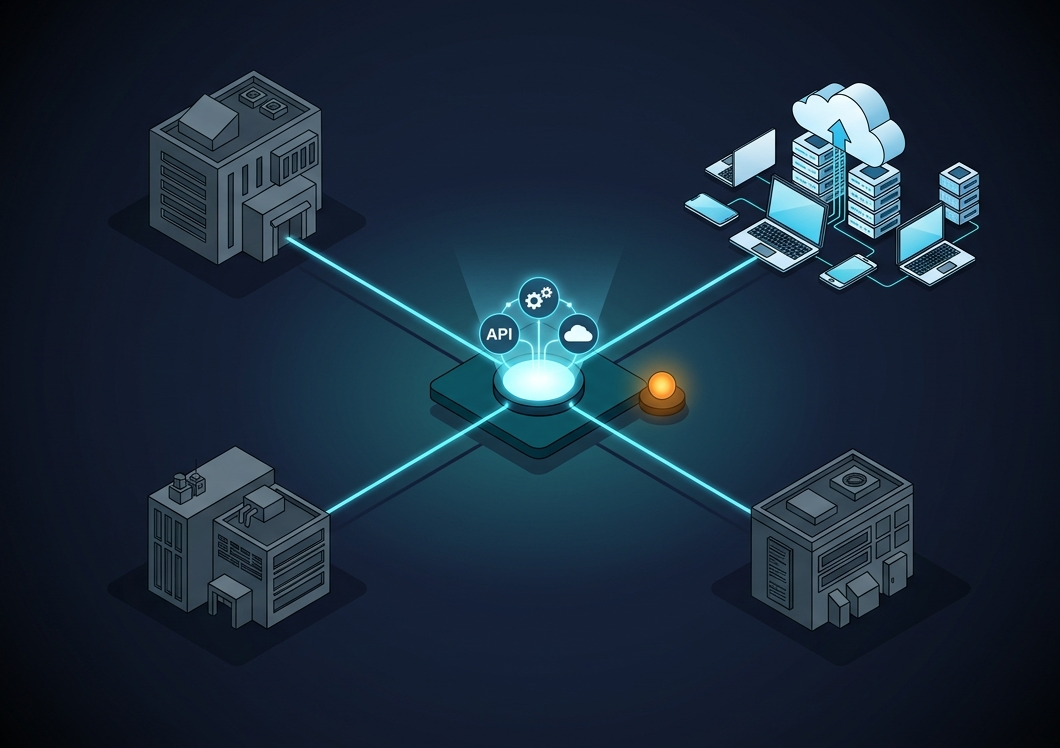
Most lists of legacy application modernization companies are written for one buyer: a large enterprise with a portfolio of hundreds of applications and a mainframe in the basement. If that is you, those lists work. If you are a mid-market company whose business runs on a Visual FoxPro, VB6, Delphi, or Microsoft Access application that one developer built twenty years ago, they point you to the wrong vendors entirely.
This guide organizes the market the way buyers actually experience it: by the kind of system you are modernizing and the kind of engagement you need. It covers three buying models: global systems integrators, desktop-era and mid-market specialists, and conversion platforms you can operate with your own team.
Table of Contents
The Companies at a Glance
| Company | Segment | Best for | Typical systems |
|---|---|---|---|
| Accenture | Enterprise integrator | Portfolio-scale transformation programs | Mainframe, ERP, large portfolios |
| IBM Consulting | Enterprise integrator | Mainframe-centric modernization | COBOL, z/OS, enterprise Java |
| Ticomix | Mid-market specialist | Business-critical FoxPro, VB6, Delphi, Access apps | Desktop-era Windows stack to .NET |
| ModLogix | Mid-market specialist | Legacy web and desktop app modernization | VFP, VB, Access, .NET Framework |
| CODE Consulting | Mid-market specialist | VFP conversions backed by publishing pedigree | VFP, VB6, older .NET |
| Keyhole Software | Mid-market specialist | Focused modernization with staff continuity | Visual Basic, Java, legacy .NET, COBOL |
| Innovatix (migrateto.net) | Mid-market specialist | Tool-assisted migrations at offshore-supported scale | VFP, VB6, Classic ASP, Access, COBOL |
| Softacom | Mid-market specialist | Delphi upgrades and Delphi to .NET | Delphi, WinForms, legacy .NET |
| FMS | Mid-market specialist | Access rescue, upsizing, or staged replacement | Microsoft Access, SQL Server, .NET |
| Legacy to Modern | Mid-market specialist | Boutique work on very old systems | MS-DOS, VB1-6, Delphi, legacy .NET |
| Great Migrations | Tool-led / hybrid | VB6 and Classic ASP re-engineering with expert support | VB6, ASP to C# or VB.NET |
| Ispirer | Tool-led / hybrid | Licensed conversion toolkit through full services | VFP, VB, Delphi, PowerBuilder, COBOL, 4GLs |
| VELO (GAPVelocity AI) | Tool-led / hybrid | Azure-aligned agentic AI modernization | Access, VB6, PowerBuilder, Delphi, more |
| Morph (Modelcode) | Tool-led / hybrid | Dev teams running their own migration | Python, Java, C++, COBOL, AngularJS |
How This List Is Organized
Legacy application modernization companies and software modernization companies are not one market. They are comprised of three buying models, and mixing them up is the most common way buyers waste an evaluation cycle:
- Enterprise systems integrators sell transformation programs. Their sweet spot is a portfolio of applications, a mainframe workload, or a multi-year cloud program with a steering committee attached.
- Desktop-era and mid-market specialists modernize individual business-critical applications. Mid-market here describes the engagement, one or a few important applications, measured in weeks and months rather than years.
- Tool-led and hybrid platforms are products you license or subscribe to, increasingly paired with engineering support from the vendor. They move code fast and work best when someone experienced owns the output.
A word on the systems themselves, because vendor marketing blurs this: the platforms these firms specialize in are in very different support states. Visual FoxPro support ended in 2015. The VB6 development environment has been unsupported since 2008, though Microsoft still supports the VB6 runtime on current Windows. Access remains a fully supported Microsoft product, and Delphi is an actively developed Embarcadero product.
What these systems share is not abandonment; it is aging architectures, scarce expertise, and environments that are no longer practical for new development. Individual applications built on them can carry serious maintenance, integration, and staffing risk even where the platform itself lives on.
Notably, the middle segment is the one most ‘top modernization companies’ lists skip. The large integrators do not publish depth on FoxPro or Access because those projects are too small for them, yet those systems still run manufacturing floors, logistics operations, and medical practices across the country. That is the gap this guide fills. One scope note: IBM i/RPG (AS/400) systems and packaged ERP customizations are their own markets with their own specialists, and are outside this guide.
Enterprise Systems Integrators
Accenture
A global integrator built for portfolio-scale modernization: assessment frameworks, offshore delivery scale, and deep cloud partnerships. Accenture is well suited to organizations modernizing dozens of applications under a dedicated transformation budget.
IBM Consulting
One of the most comprehensive mainframe modernization offerings in the market, with deep z/OS and enterprise Java expertise. IBM also sells watsonx Code Assistant for Z, a software product aimed at COBOL translation, which consulting engagements can draw on.
Desktop-Era and Mid-Market Specialists
Ticomix
Ticomix is an independent, privately held software firm with a 100% U.S.-based team. Its software development manager, Donald Knoup, wrote two developer handbooks on FoxPro conversion, FoxPro to C# and FoxPro to SQL. The firm converts FoxPro, VB6, Delphi, and Access systems to modern .NET using Ticomix REV, its AI-assisted conversion methodology pairing proprietary tooling with senior engineers, which has cut development time by roughly 40%, making delivery about 66% faster, based on Ticomix project data. Clients include Lodeso, BP Aero, the University of Southern California, and the U.S. House of Representatives.
ModLogix
The dedicated legacy modernization brand of Langate Corp, a software company whose roots go back to 1996, with delivery teams in the U.S. and Ukraine. ModLogix specializes exclusively in legacy software transformation, with published coverage spanning Visual FoxPro, Visual Basic, Access, and older .NET, and produces some of the most thorough educational content in the VFP space.
CODE Consulting
The consulting arm of EPS Software, the Houston company behind CODE Magazine, a developer publication with deep roots in the Visual FoxPro community. The current practice is broader than its FoxPro heritage: VFP and VB6 conversions, older .NET upgrades, and cloud, mobile, and API modernization.
Keyhole Software
A U.S. software consultancy with a senior-consultant delivery model and modernization coverage across Visual Basic, COBOL, Java, and legacy .NET. Keyhole serves organizations from startups to the Fortune 100; what earns it a place here is the shape of its engagements, focused teams that modernize the system and can stay on to build what comes next.
Innovatix Technology Partners (migrateto.net), formerly branded Macrosoft
Innovatix runs a dedicated migration practice at migrateto.net covering Visual FoxPro, VB6, Classic ASP, and Access, and extending into COBOL, C++, and legacy Java, one of the broadest published source-technology lists in this segment. The practice is built around internal tooling, including its Code Morph converter and CodeAuto AI tool, applied by a large offshore-supported delivery team.
Softacom
A Delphi and .NET modernization specialist operating since 2008, with offices in Seattle and London, ISO 27001 certification, and an Embarcadero consulting partnership; its founder is an Embarcadero MVP. Softacom’s published cases run from Delphi version upgrades (Delphi 5 and 7 to current releases) to full Delphi-to-.NET and desktop-to-web conversions, with 90+ modernizations delivered.
FMS
A Microsoft Access specialist in business since 1986, based in Tysons Corner, Virginia, and best known as the developer of the Total Access product line used by Access developers worldwide; FMS also wrote Microsoft’s own Jet Database Engine Programmer’s Guide. Consulting services run from rescuing and enhancing existing Access databases to SQL Server and Azure upsizing to staged replacement with .NET, including work for federal government clients.
Legacy to Modern
A Reno, Nevada boutique with published coverage of MS-DOS applications, Visual Basic from VB1 through VB.NET, Delphi 1 through XE, and legacy .NET Framework, the oldest platform reach in this segment. The firm advertises a 100% U.S. citizen workforce with all delivery on U.S. soil.
Tool-Led and Hybrid Modernization Platforms
Many specialist firms use internal analysis, conversion, or AI-assisted tooling. The platforms below are different: you can license or subscribe to them directly, and most now pair the tooling with engineering support from the vendor. The dividing line in 2026 is no longer whether AI is involved. It is who operates the system and who owns the outcome when the converted code meets production.
Great Migrations
A U.S. firm offering gmStudio, a software re-engineering tool for upgrading VB6 and Classic ASP systems to C# or VB.NET, alongside consulting, methodology, and partner support. A Microsoft Certified Partner with published client success stories, including large financial-services .NET adoptions.
Ispirer
A long-established conversion vendor whose published matrix covers Visual FoxPro, Visual Basic, Delphi, PowerBuilder, COBOL, and several 4GLs, alongside database migration. The offering spans licensed tooling, toolkit customization, testing, and full conversion services, making it one of the more flexible tool-to-service ranges in the market.
VELO by GAPVelocity AI
An agentic AI modernization platform from GAPVelocity AI, the modernization unit of Growth Acceleration Partners built on the former Mobilize.Net technology. Launched in April 2026 with Access-to-Blazor conversion, VELO’s published coverage now spans VB6, VB.NET, Classic ASP, WinForms, PowerBuilder, Clarion, Delphi, Access, and more, targeting Blazor and Azure. The model is explicitly hybrid: the platform produces what GAPVelocity calls Alpha Ready code, and human engineers stabilize it to production quality.
Morph by Modelcode
A self-serve SaaS product for AI code modernization. Morph generates a project spec before touching code, delivers the migration as reviewable milestones in pull requests, and runs functional tests comparing the original and migrated applications side by side. Published examples center on mainstream stacks: Python, Java, C++, COBOL-to-Java, and AngularJS-to-React.
How to Choose: Match the Vendor to Your Situation
You run a mainframe or a large application portfolio. Start with the enterprise integrators, and expect a program, not a project.
Your business depends on one aging FoxPro, VB6, Delphi, or Access application. The specialist segment is your market. Shortlist two or three, ask each how they recover business logic that was never documented, and ask for a fixed scope on the first phase.
You have a capable development team. Evaluate the tool-led platforms before hiring anyone. For VB6 and Access there are now purpose-built platforms; for mainstream-language codebases, a tool plus your own engineers may be the cheapest defensible path.
You are not sure what you have. Most specialists, Ticomix included, will assess the system first. An assessment that maps your code, data, and integrations is independently valuable even if you never migrate, and you can get a rough number yourself in two minutes with the Legacy Modernization ROI Calculator.
FAQs About Legacy Application Modernization Companies
For a single mid-market business application, in Ticomix’s project experience smaller systems can come in under $50,000, and most full conversions of a business-critical departmental application land in the low six figures, typically between $100,000 and $250,000. Enterprise portfolio programs run far higher. In our experience, AI-assisted methods such as Ticomix REV have been compressing development time and therefore cost, so quotes from even two years ago are worth refreshing.
In Ticomix’s experience, smaller, well-structured applications typically take 8 to 16 weeks. Larger or more complex systems run 6 to 12 months, often delivered in phases so the business keeps operating throughout.
It depends on who will own the output. Tools convert code quickly, but converted code still needs architecture decisions, testing, and remediation. If you have senior developers with capacity, a tool-led platform can work, and several now include vendor engineering support. If the people who understood the system are gone, a specialist who recovers the business logic is usually the safer investment.
Data can and should be preserved, and in a well-run project it is. A sound plan includes verified backups, field and record mapping, reconciliation totals, exception reporting, representative business-process testing against the old and new systems, and a rollback procedure before cutover. Ask any vendor to walk you through exactly those steps.
Sometimes, if your team has both spare capacity and experience with the legacy platform. Internal rebuilds often stall because the team must reverse-engineer undocumented rules while keeping the old system running. Getting a fixed-scope external quote first gives you a real number to compare against internal cost.
About the Author

Donald Knoup
This guide was prepared by the Ticomix team and reviewed by Donald Knoup, Software Development Manager at Ticomix and author of two FoxPro conversion handbooks. Ticomix is an independent U.S. software firm that migrates FoxPro, VB6, Delphi, and Access applications to modern .NET, with clients including Lodeso, BP Aero, USC, and the U.S. House of Representatives. Details on other vendors were checked against their published materials in July 2026; fit assessments are our editorial judgment.